

Your back MRI may be a waste of money, and may not change your treatment.
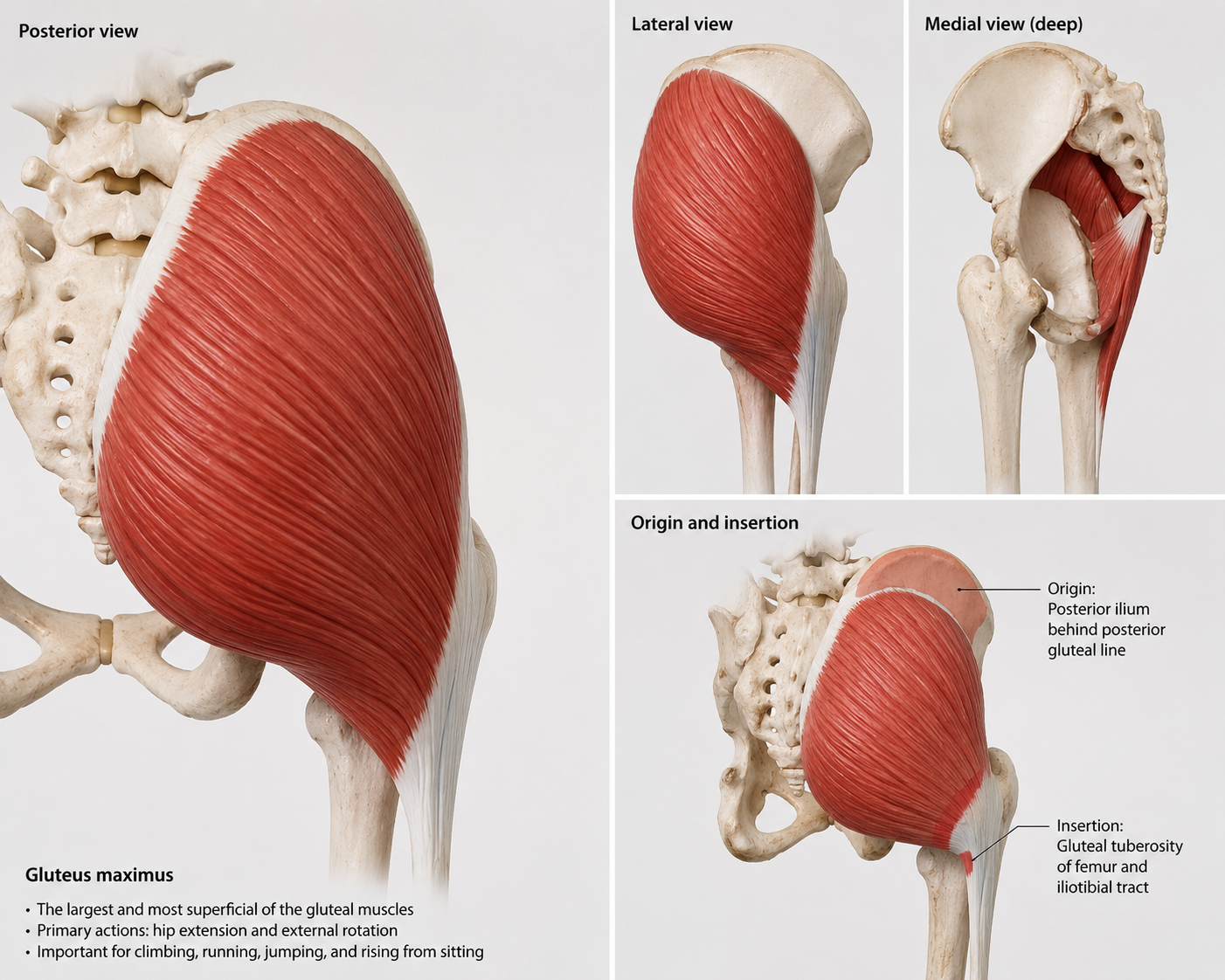
Why Glute Strength Matters Even If You Don't Have Hip Pain
A common question we get asked is:
"Why am I doing these hip exercises if I don’t have hip pain?”
It’s a fair question. If your knee hurts, why are you strengthening your hips? If you have back pain, why are glute exercises part of your treatment plan?
The answer comes down to the way the body moves. Your muscles don’t work in isolation. The trunk, hips, knees, and ankles all work together to both produce and control movement. The muscles around your hips - especially your glutes - play an important role in helping your body create force, absorb loads, and produce efficient movement during everyday activities and sports.
Your Glutes Do More Than Move Your Hips
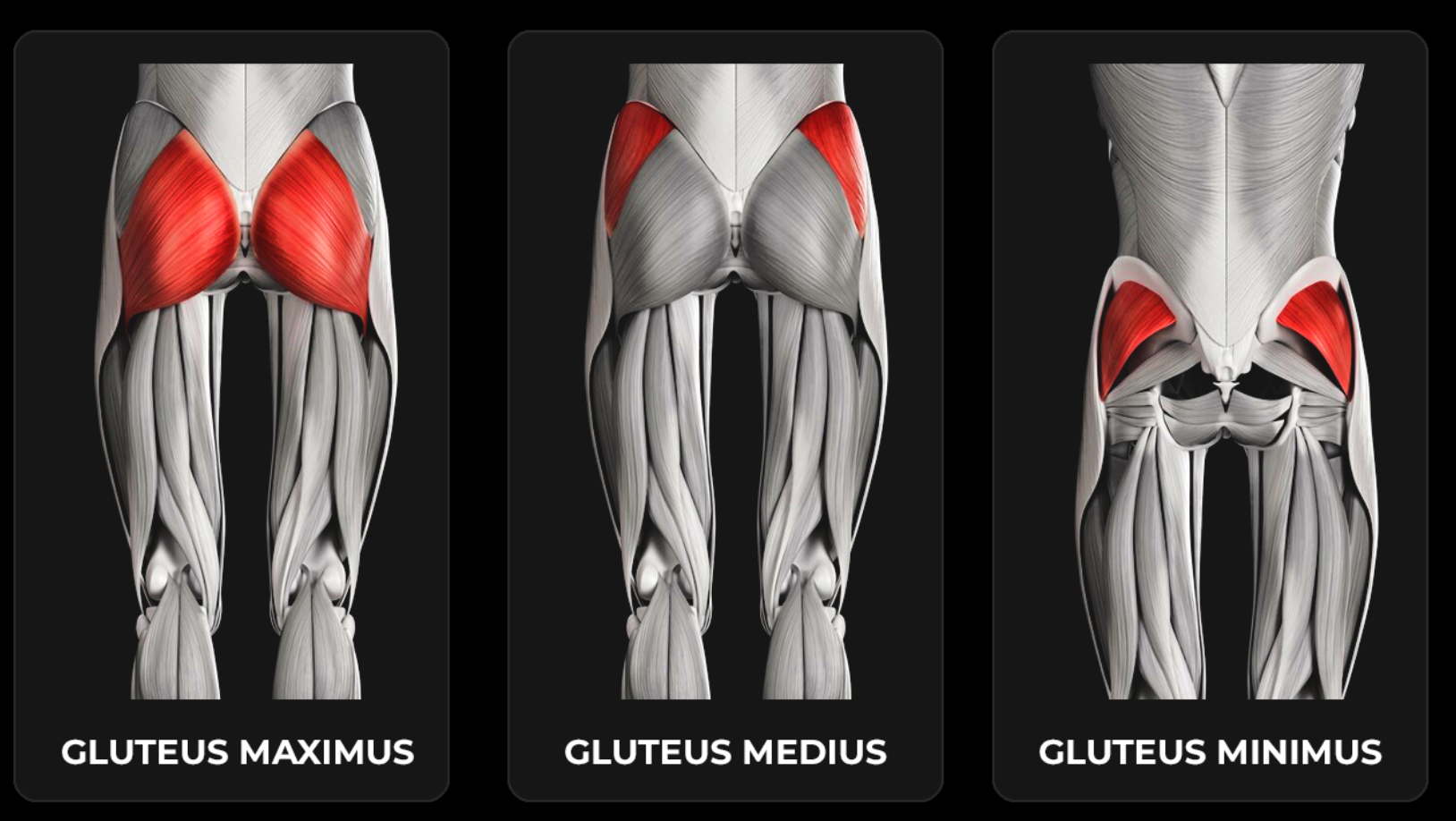
The glute muscles are some of the most powerful muscles in the body. While many people think of them only as "butt muscles," their role extends far beyond hip movement.
The gluteus maximus is a major contributor to hip extension and helps with:
- Producing force during activities such as running, climbing stairs, jumping, and lifting
- Driving the body upward from positions such as squatting or rising from a chair
- Controlling hip motion during higher-demand activities
The gluteus medius and minimus contribute to:
- Hip abduction and rotation control
- Maintaining pelvic stability during single-leg activities such as walking and running
- Controlling femoral motion during functional movements
Their strength influences how forces are distributed throughout the lower extremity during movement. [4]
Why Glute Strength Matters for More Than Hip Pain
Your hips are an important link between your trunk and your lower extremities. Because of this, hip strength and control have been studied in several common orthopedic conditions, including knee and low back pain.For example, research on patellofemoral pain (pain around or behind the kneecap) has found that individuals with knee pain may demonstrate differences in hip strength, hip muscle function, and lower body movement patterns compared with individuals without knee pain. [1,5] Similarly, individuals with chronic low back pain may demonstrate differences in hip strength, endurance, and movement control compared with individuals without back pain. [6,7] Let me make it clear, this doesn’t necessarily mean that weak glutes = knee or back pain. Pain is complex and influenced by many factors, including but not limited to, training load, anatomical dysfunction, mobility, and even stress response. Instead, improving your glute strength needs to be one portion of a bigger rehabilitation plan to help improve your body's tolerance to the activities you want to get back to.
Stronger Muscles Improve Your Capacity
Healthy tissues are designed to experience load, and muscles will adapt to the demands placed on them. To improve strength and resilience, your body needs an appropriate challenge that gradually increases over time.
Building glute strength can help you:
- Walk longer distances
- Run and exercise with confidence
- Lift weights safely
- Hike and participate in recreational activities
- Perform daily tasks more easily
Important to note that not all exercises are actually that effective for building functional hip strength. Sure, you can do all the “big booty” exercises that you see on TikTok, but it probably isn’t going to actually get you back to running that marathon or playing 18 holes of golf without back pain.
Effective functional glute strengthening may include:
- Squats
- Deadlifts
- Step-ups
- Lunges
- Hip thrust variations
- Single-leg exercises
So if your physical therapist gives you hip exercises for a knee, back, or leg problem, there is usually a reason behind it.
Ready to Move Better?
If pain is keeping you from running, exercising, working, or participating in the activities you enjoy, physical therapy can help identify the factors contributing to your symptoms and create a plan tailored to your goals.
At Choice City Physical Therapy, our physical therapists use evidence-based movement assessment and individualized exercise programs to help you build strength, improve confidence, and return to the activities that matter most.
Contact us today to schedule your physical therapy evaluation and take the next step toward moving better.
References
- Willy RW, Hoglund LT, Barton CJ, et al. Patellofemoral Pain Clinical Practice Guidelines: Revision 2019. Journal of Orthopaedic & Sports Physical Therapy. 2019;49(9):CPG1-CPG95.
- Lack S, Barton C, Sohan O, Crossley K, Morrissey D. Proximal Muscle Rehabilitation Is Effective for Patellofemoral Pain: A Systematic Review With Meta-analysis. British Journal of Sports Medicine. 2018;52(21):1405-1415.
- van der Heijden RA, Lankhorst NE, van Linschoten R, et al. Exercise for Treating Patellofemoral Pain Syndrome. Cochrane Database of Systematic Reviews. 2015.
- Distefano LJ, Blackburn JT, Marshall SW, Padua DA. Gluteal Muscle Activation During Common Therapeutic Exercises. Journal of Orthopaedic & Sports Physical Therapy. 2009;39(7):532-540.
- Powers CM, Bolgla LA, Callaghan MJ, Collins N, Sheehan FT. Patellofemoral Pain: Proximal, Distal, and Local Factors, 2nd International Research Retreat. Journal of Orthopaedic & Sports Physical Therapy. 2017;47(3):A1-A34.
- Cooper NA, Scavo KM, Strickland KJ, et al. Prevalence of gluteus medius weakness in people with chronic low back pain compared with healthy controls: A systematic review. Journal of Back and Musculoskeletal Rehabilitation. 2016;29(4):683-693.
- Sadler SG, Spink MJ, Ho A, et al. Restriction in lateral bending range of motion, lumbar lordosis, and hamstring flexibility are associated with low back pain: A systematic review and meta-analysis. BMC Musculoskeletal Disorders. 2017;18:338.
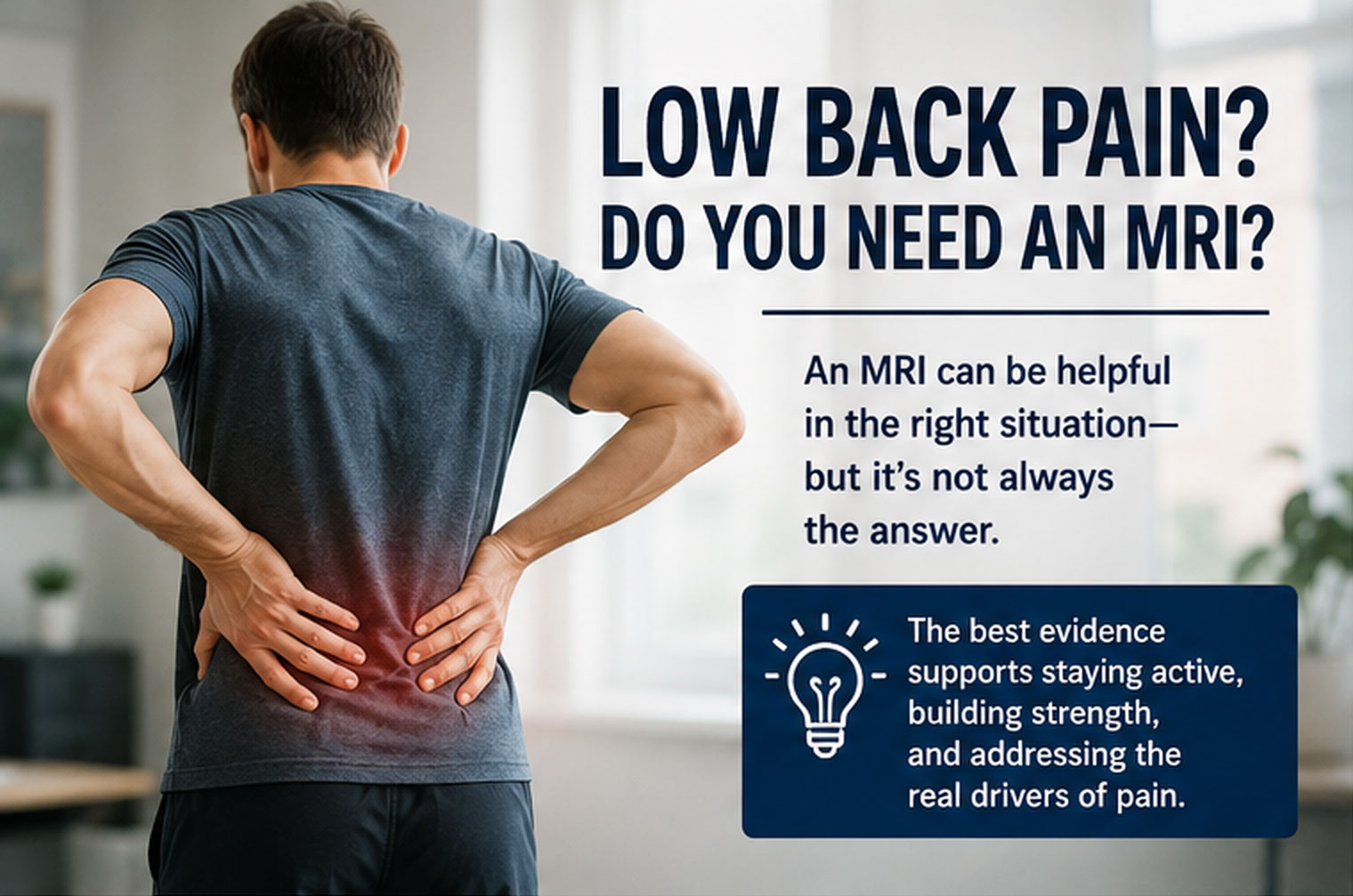
Does your low Back MRI matter?

All About Insurance
Here is everything you need to know about health insurance, and why it is so dang confusing.
Do Your Glutes Need Activating?
What's the skinny on this, or is it a whopper?