

What your back MRI really Means
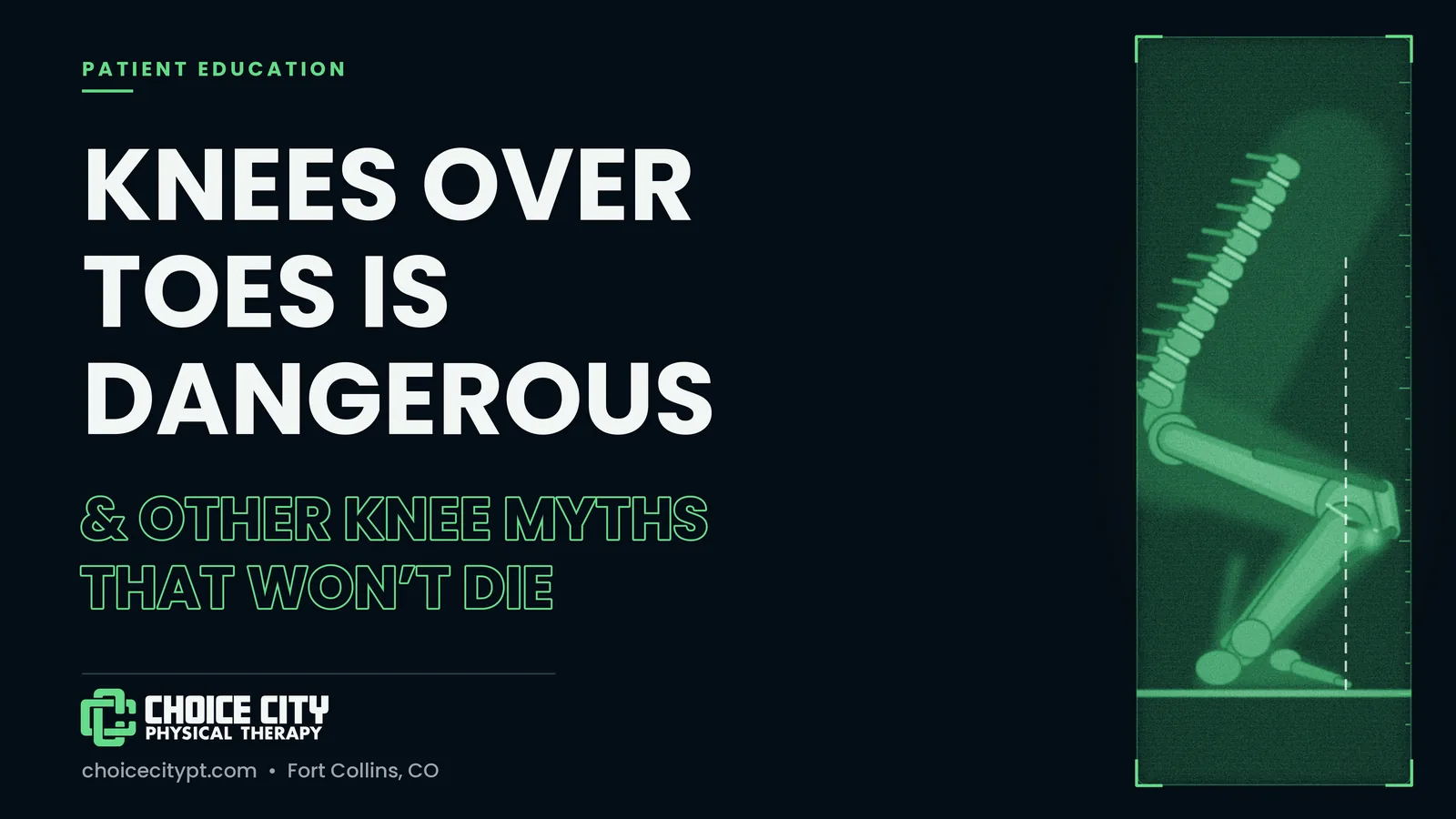
We hear these almost every single day, so let's chat about them.
Myth 1: Your knees should never go over your toes.
This one is a doozy. It traces back to a 1961 study by Dr. Karl Klein, who concluded that anything below a half knee bend where the knees travel over the toes was "useless and ruinous." (1)
Many studies since have worked to debunk it. Fry et al. showed that restricting forward knee travel doesn't make the squat safer - it just shifts the load further up the chain. By blocking knees-over-toes, knee torque dropped by 22%, but hip torque increased by a whopping 1070%. (2)
The reality? If your knees never went over your toes, you couldn't walk downstairs, get into a chair, or sit on the toilet without falling backward.
The better question is how MUCH load and how OFTEN. A controlled deep squat with bodyweight is very different from a deep squat with 300 lbs when you don't have the quad strength for it. We actually train knees-over-toes on purpose, especially for those looking to return to hiking and skiing.
Myth 2: Running ruins your knees and causes arthritis.
For most people, the current research shows the opposite - recreational runners don't have higher rates of knee arthritis than non-runners.
A 2023 systematic review (3) analyzed 17 studies including 7,194 runners and 6,947 non-runners. It found that running was not associated with worsening patient-reported outcomes like pain and symptoms, or with radiologic signs of knee OA. In fact, they reported a significantly higher prevalence of knee pain in the non-runner group compared to recreational runners.
Running can actually improve cartilage health when dosed appropriately. What typically drives knee pain is doing too much too fast, or doing nothing at all. A sudden jump from 5 miles a week to 25 is a problem. Consistent, gradual increases in running volume is not.
Myth 3: You need to strengthen your VMO to fix knee pain.
The VMO, or vastus medialis oblique, is the teardrop-shaped lower portion of your vastus medialis - one of the four muscles that make up your quadriceps. It gets special attention because its fibers run more obliquely than vertically, which would create a slightly different line of pull on your kneecap.
There's a lot of debate about whether you can or should isolate it. Some studies point to a lack of separate nerve supply and no EMG evidence showing preferential activation of the VMO over the rest of the quad, while others swear a straight-leg raise in a toe-out position will "light your VMO on fire!" Maybe my bias is showing.
The reality is it doesn't really matter if you can isolate your VMO or not. Solving your knee pain is more complicated than one muscle. It's going to require careful load management and strengthening of the entire lower leg complex - and that means actually throwing some weight around and training the whole system, not just one teardrop.
Myth 4: Your IT band needs to be stretched / foam rolled into submission.
Your IT band is a thick piece of fascia, not a contractile muscle you can lengthen. It has very limited capability for elongation, with anatomical models suggesting that producing meaningful changes in IT band length would require forces far beyond what any foam roller or manual therapist can generate. (4)
If the outside of your knee hurts, hammering your IT band isn't going to fix it. Usually that pain is about capacity vs. load: weak glutes, a big jump in running volume, or stiff hips and ankles forcing your knee to take on more load than it can handle. Addressing that balance with supervised adjustments to mileage and hip strength is going to help a lot more than beating up the side of your leg.
---
The theme of all this? Your knee is more resilient and adaptable than you've been led to believe. It doesn't need perfect alignment or protection from every movement. It needs progressive, consistent strength.
---
References - if you like the nerdy stuff.
1. Klein KK. The deep squat exercise as utilized in weight training for athletes and its effects on the ligaments of the knee. *J Assoc Phys Ment Rehabil.* 1961;15(1):6-11.
2. Fry AC, Smith JC, Schilling BK. Effect of knee position on hip and knee torques during the barbell squat. *J Strength Cond Res.* 2003;17(4):629-633.
3. Dhillon J, et al. Effects of running on the development of knee osteoarthritis: an updated systematic review at short-term follow-up. *Orthop J Sports Med.* 2023;11(3):23259671231152900.
4. Falvey EC, et al. Iliotibial band syndrome: an examination of the evidence behind a number of treatment options. *Scand J Med Sci Sports.* 2010;20(4):580-587.
Wrinkles on the inside: What your Back MRI really means
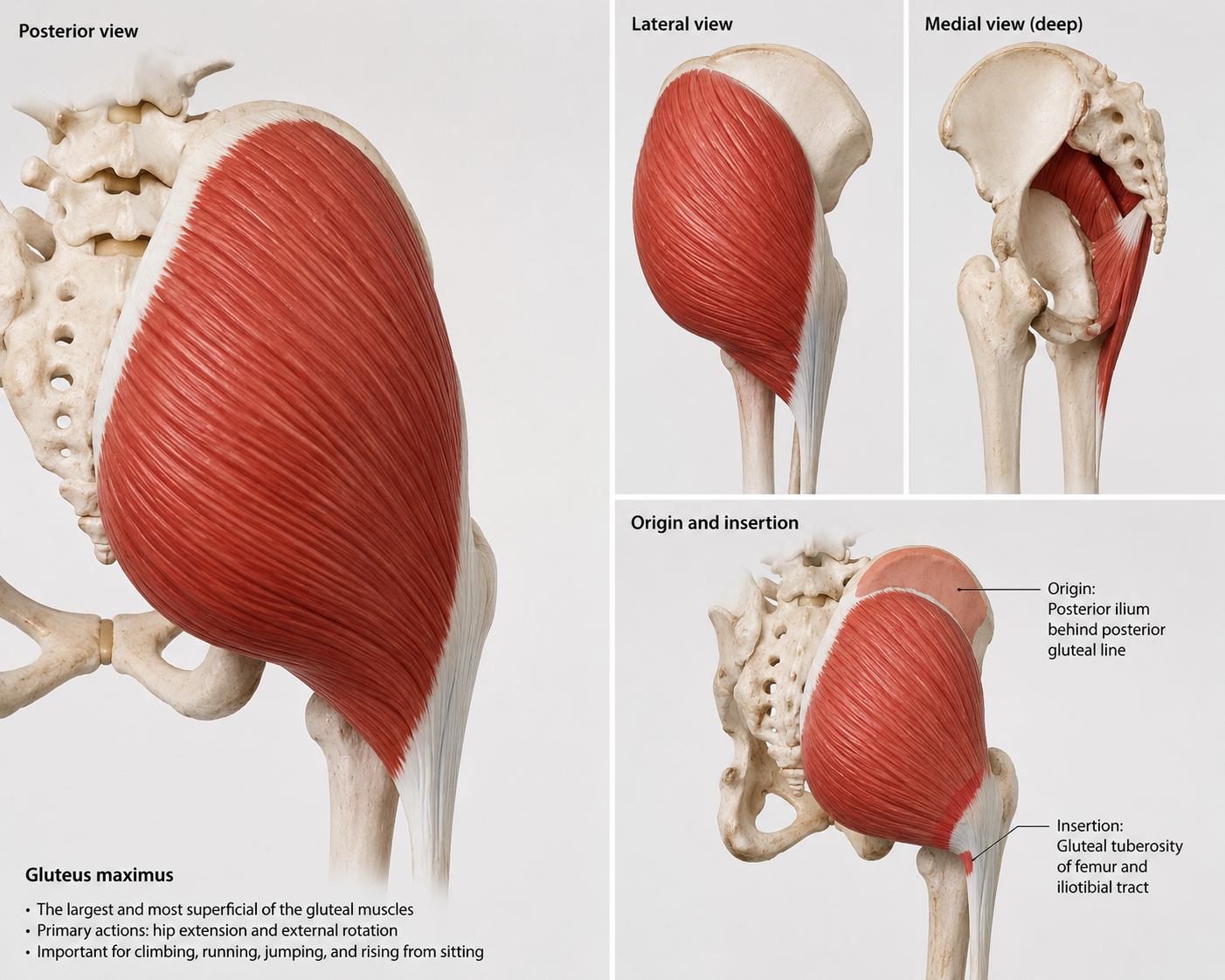
Why Glute Strength Matters Even If You Don't Have Hip Pain
Glute strength matters even if you don't have hip pain
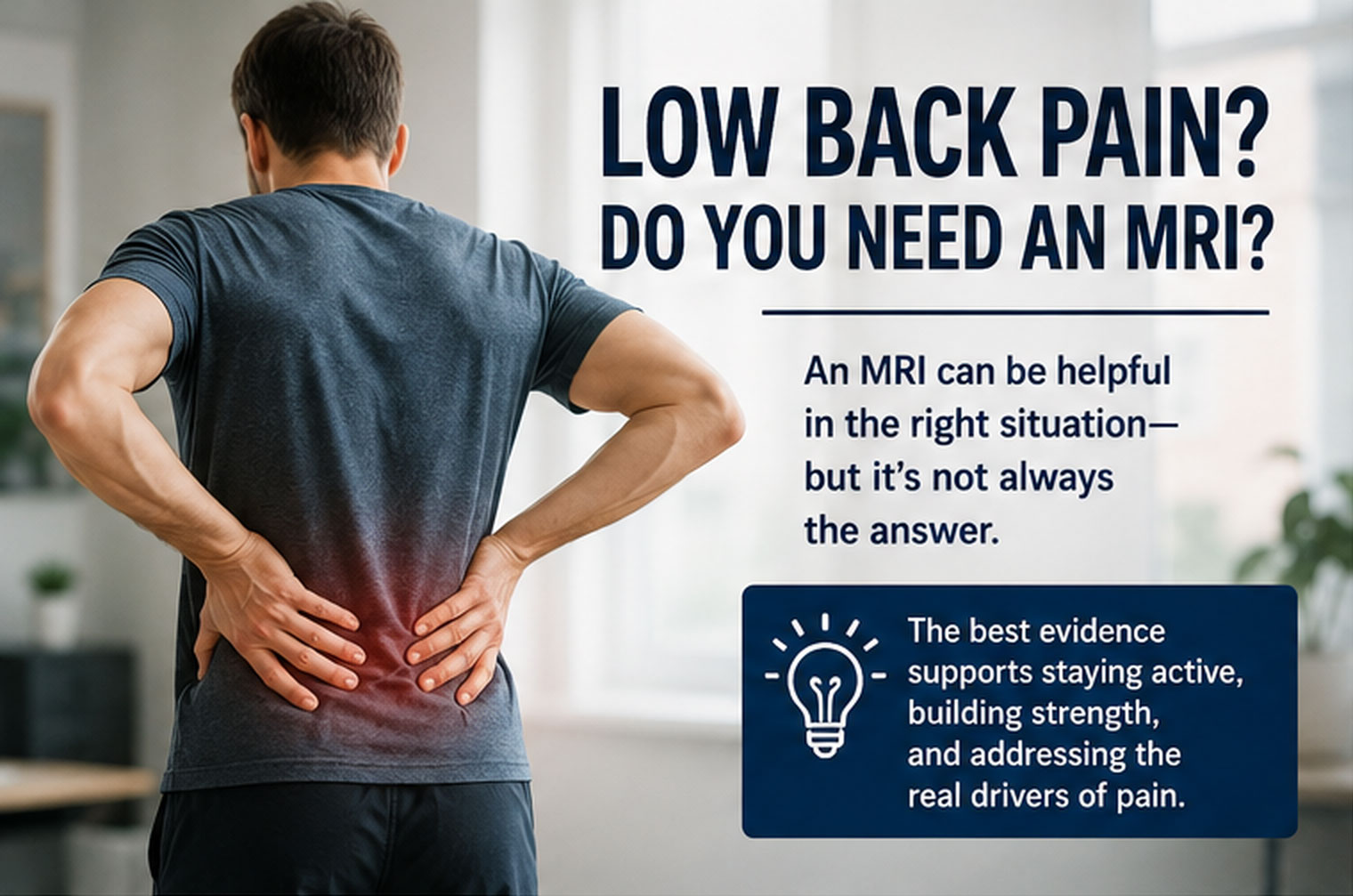
Does your low Back MRI matter?
Your back MRI may be a waste of money, and may not change your treatment.