

What your back MRI really Means
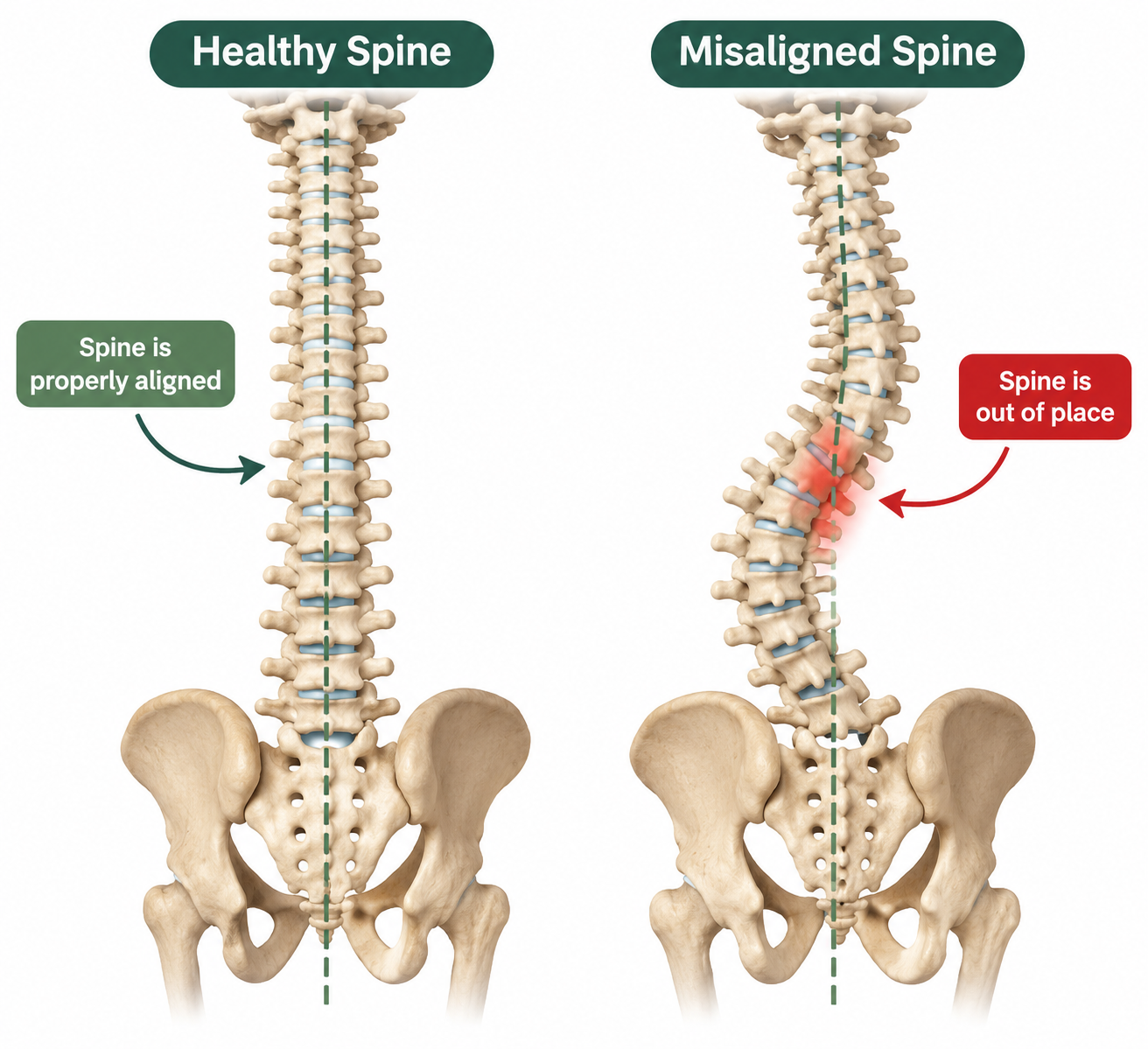
If you have ever been told that your pelvis is "rotated," your hip is "out of alignment," or your ribs are "slipped," you are not alone. For decades, many of us have been taught to think of our bodies like a stack of building blocks that occasionally needs to be clicked back into place.
However, modern medical research tells a very different story. When we look at the highest-level scientific studies, the evidence is clear: humans cannot reliably feel if a joint is slightly "out of place" or if a muscle is truly "tight" just by touching it.
Here is what the science actually says about what’s happening beneath your skin.
The Myth of the "Out of Place" Joint
The idea behind checking your alignment is simple: a clinician presses on your bones and declares that one side is a tiny bit lower or twisted. But according to massive reviews of the medical data, our hands simply aren't built to measure millimeters through skin, fat, and muscle.
- The Pelvis and Hip: Large medical reviews have looked at how well therapists agree when feeling pelvic bones. The results? Two different experts looking at the exact same patient rarely agree on which side is "higher" or "rotated." The data shows these tests are so unreliable that researchers explicitly recommend doctors stop using them to make diagnoses.
- The Sacroiliac (SI) Joint: Many people are told their SI joint (where your spine meets your pelvis) is "out." In reality, biomechanical studies show this joint only moves about 1 to 2 millimeters—less than the thickness of a coin. It is physically impossible to feel that tiny shift from the outside.
- The Ribs and Spine: Scientific reviews show that what a therapist thinks is a "slipped rib" or a "misaligned spine" is usually just the natural, normal shape of your bones. Just like our faces look different, our bones have natural lumps and bumps that are perfectly healthy.
Can We Actually Feel "Tissue Tightness"?
If we can't feel bones out of place, can we at least feel a "tight muscle"? Surprisingly, science says no. Studies show that while clinicians can easily agree on whether a spot hurts when they press it, they cannot agree on whether a muscle actually feels tight or stiff.
The Check Engine Light Analogy
Think of a muscle feeling tight like the "check engine" light flashing on your car's dashboard. The light itself isn't a mechanical breakdown of the bulb—it is just an alarm system warning you that something under the hood needs attention. When a muscle feels "tight" to you, it is rarely because the tissue has physically shrunk or knotted up. Instead, it is a protective neural warning sign from your nervous system. Your brain is telling that muscle to tense up to guard you from pain, stress, fatigue, or a perceived threat.
A Better Way: From "Crooked" to "Sensitive"
If we can't rely on feeling for crooked bones, how should we treat pain? The research points to a much more encouraging approach:
- Focus on Sensitivity, Not Structure: Your therapist shouldn't be looking for things out of place. Instead, they should look for what reproduces your familiar ache (called "pain provocation"). Finding what is sensitive tells us what needs a temporary break, not what needs to be forced back into position.
- Your Body is Not a Jenga Tower: High-quality clinical trials show that you don't need a "crack" or a structural adjustment to get better. The best long-term results come from active movement: tailored exercises, stretching, strength training, and understanding how pain works.
- Words Matter: Being told your body is "crooked" or "unstable" is scary. It makes us move stiffly and guard ourselves, which actually creates more pain.
The Bottom Line: Your body is remarkably strong, stable, and resilient. Your bones do not just slip out of alignment during daily life. Palpation (touch) is great for finding where your body is sensitive, but it can't find a bone "out of place" because your body isn't broken—it's just having a sensitive moment. Focus on how you move and feel, not on perfect symmetry.
Key Scientific References
- Pelvic Landmark Reliability: Cooperstein, R., & Lew, M. (2016). The interexaminer reliability of palpating pelvic landmarks: a systematic review. Physical Therapy Reviews, 21(3-6).
- SI Joint Mobility and Palpation Limitations: Goode, A., et al. (2008). Three-dimensional movements of the sacroiliac joint: a systematic review of the literature and assessment of clinical utility. Journal of Manipulative and Physiological Therapeutics, 31(1).
- Spinal Palpation and Alignment Faults: Haneline, M. T., & Young, M. (2009). A review of the reliability of chiropractic palpation fault identification. Journal of Manipulative and Physiological Therapeutics, 32(6).
- Soft Tissue Tightness and Palpation Reliability: Seffinger, M. A., et al. (2004). Reliability of spinal palpation for diagnosis of back and neck pain: a systematic review of the literature. Spine, 29(19).
Wrinkles on the inside: What your Back MRI really means
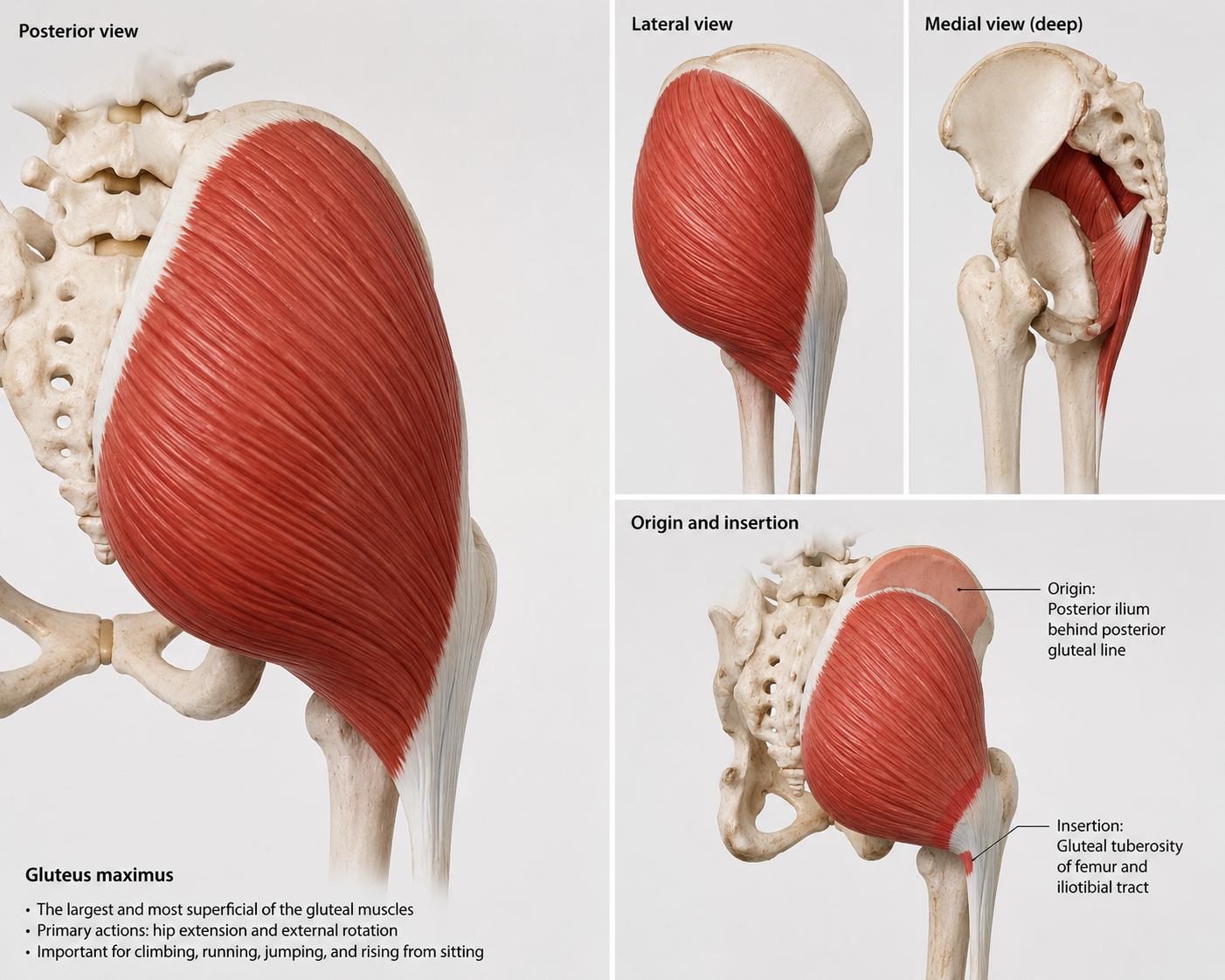
Why Glute Strength Matters Even If You Don't Have Hip Pain
Glute strength matters even if you don't have hip pain
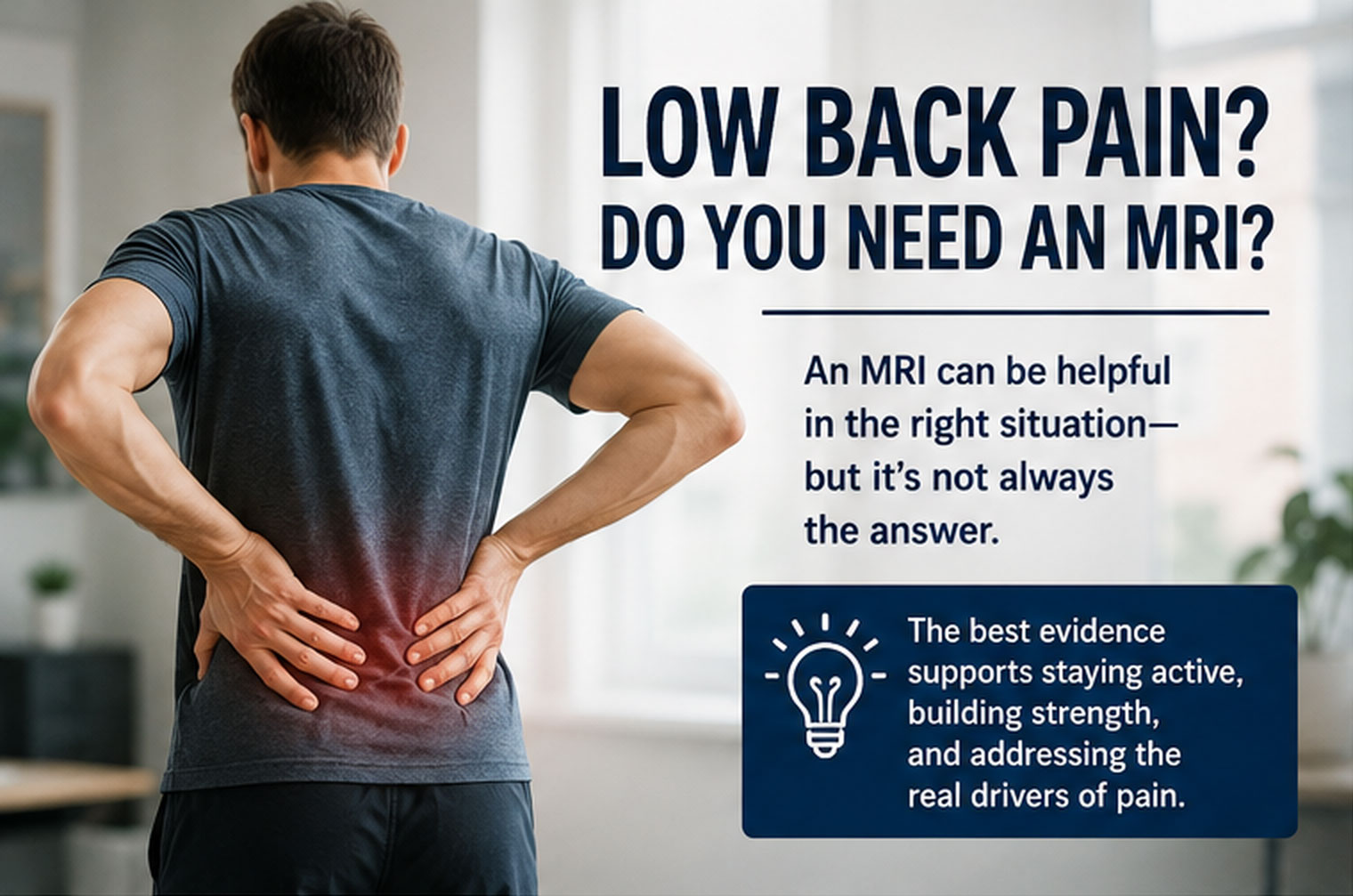
Does your low Back MRI matter?
Your back MRI may be a waste of money, and may not change your treatment.