

Should we be avoiding knee extensions after an ACL reconstruction? Does the evidence hold up?
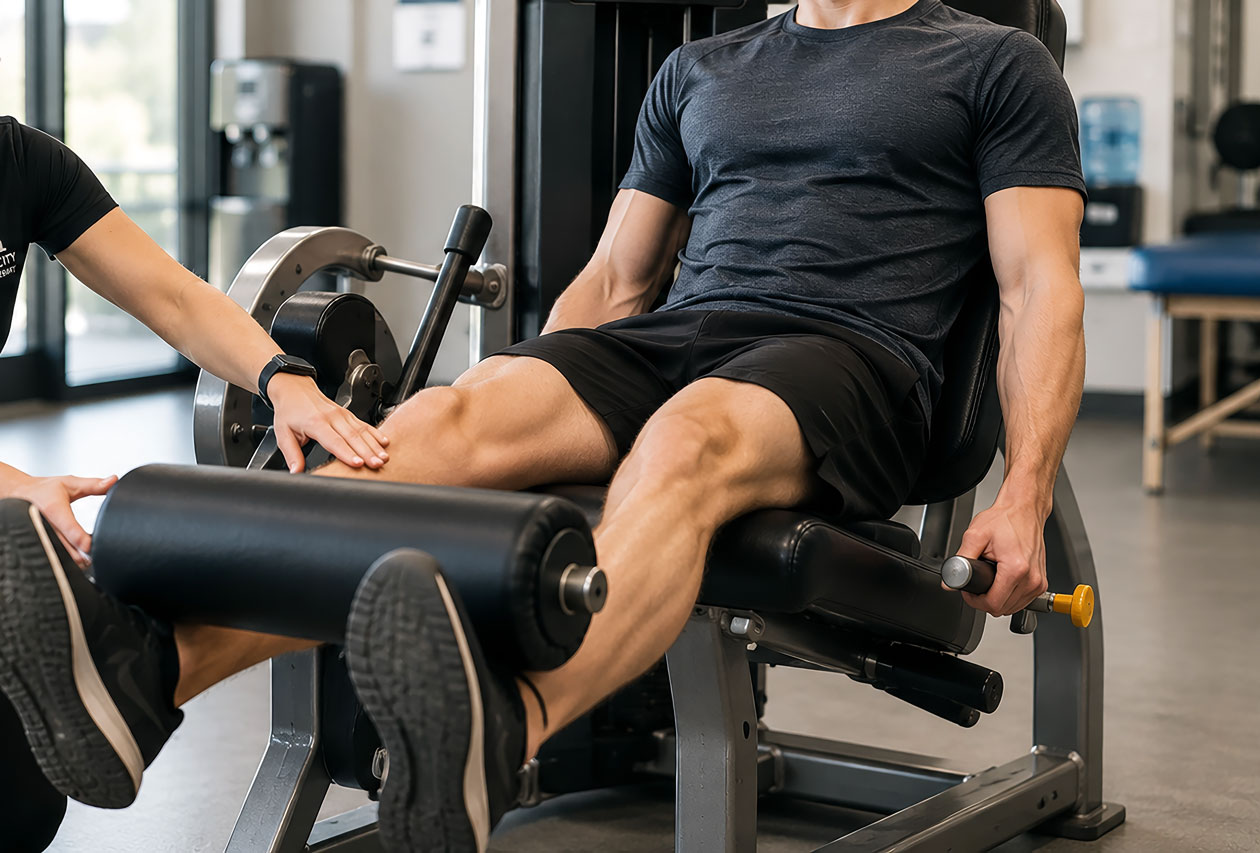
Are leg extensions Safe after ACL reconstruction? The evidence says yes, however with the right timing.
If you’ve had an ACL reconstruction (ACLR), you’ve probably heard the advice: “Don’t do leg extensions—they’re bad for your new ACL.” For years, this has been common practice. Instead, rehabilitation has focused heavily on closed kinetic chain (CKC) exercises like squats, lunges, and step-ups while avoiding open kinetic chain (OKC) exercises such as seated leg extensions. But does the research actually support avoiding leg extensions? Let’s take a look at what the evidence says.
Why quadriceps strength matters.
Recovering quadriceps strength is one of the biggest challenges after ACL reconstruction. Even nine months or more after surgery, many people still have significant weakness compared to their uninjured leg. This weakness isn’t just frustrating, it matters.
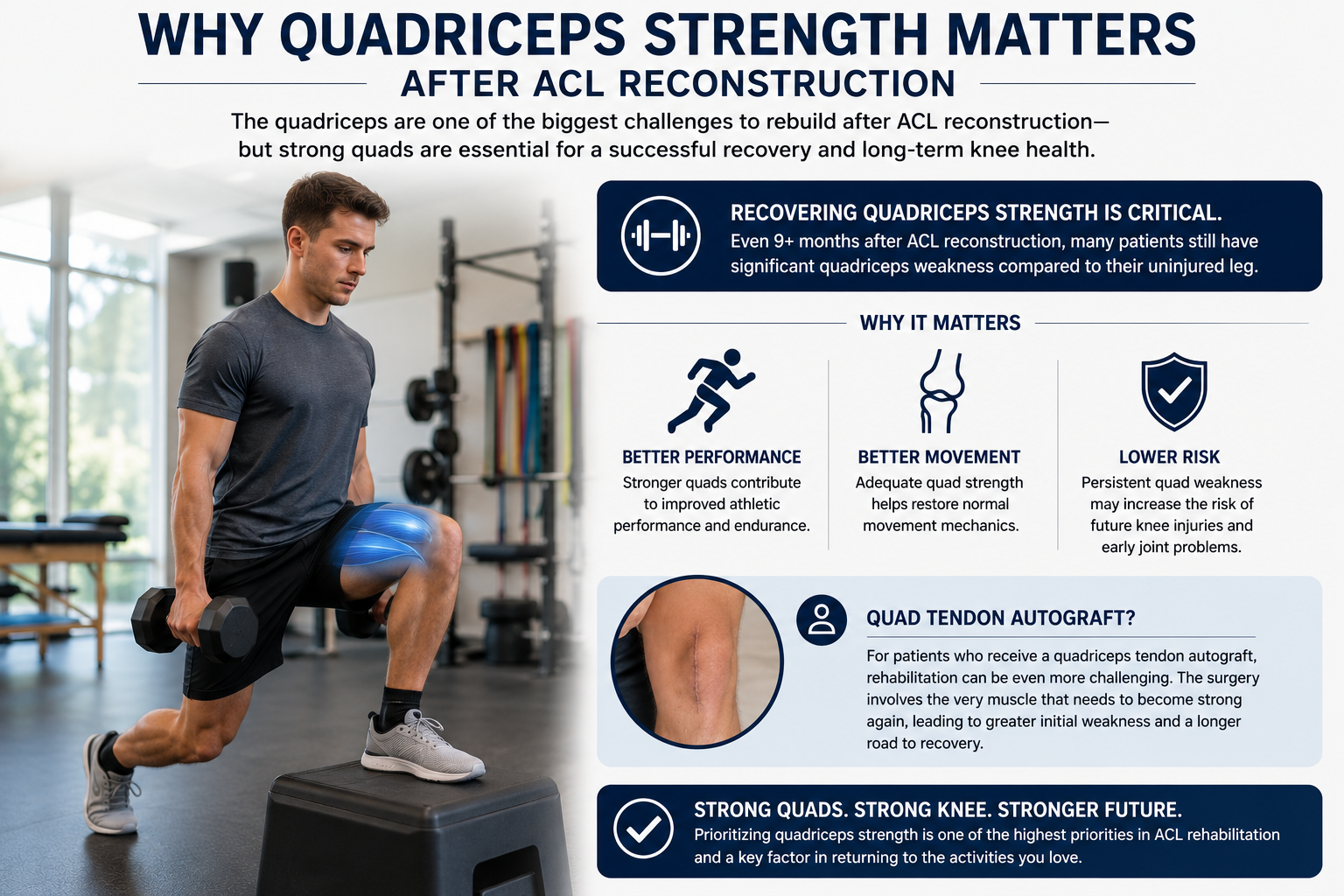
Persistent quadriceps deficits have been linked to reduced athletic performance, altered movement mechanics, and may increase the risk of future knee problems. The challenge can be even greater for patients who receive a quadriceps tendon autograft, as the surgery itself temporarily weakens the muscle that needs to become strong again. Because of this, finding the most effective ways to rebuild quadriceps strength is one of the highest priorities during rehabilitation.
Where did the fear of leg extensions come from?
The concern is simple: during a seated leg extension, the quadriceps pull the tibia forward, theoretically increasing stress on the ACL graft. For years, many clinicians believed this could stretch the graft, increase laxity, or even compromise the reconstruction. As a result, many rehabilitation protocols delayed leg extensions for months—or avoided them entirely. But when researchers actually measured the forces placed on the ACL, the story became much more interesting.
How much stress do leg extensions actually place on the ACL?
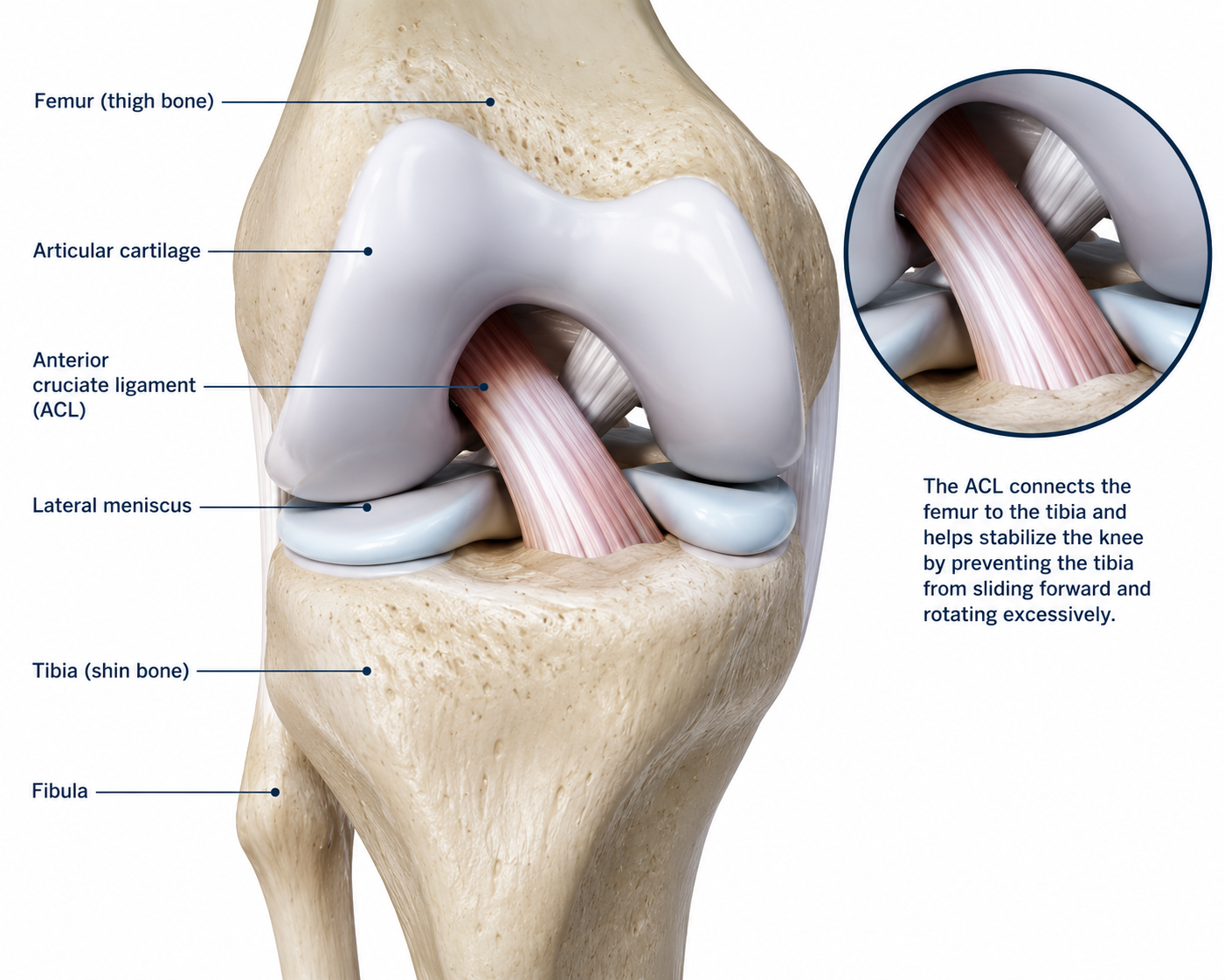
A 2012 review published in the Journal of Orthopaedic & Sports Physical Therapy (JOSPT) examined ACL strain during various exercises. One surprising finding was that performing a seated knee extension through a 0-90° range produced similar levels of ACL strain as:
- A standard Lachman test (the clinical exam used to assess ACL integrity)
- A double-leg squat to 90° while holding approximately 30 pounds
In other words, the strain created by a controlled leg extension was not dramatically different from exercises that are routinely prescribed during rehabilitation. The important takeaway is that load, technique, and range of motion matter far more than simply labeling an exercise as “good” or “bad.”
What happens when patients actually perform leg extensions?
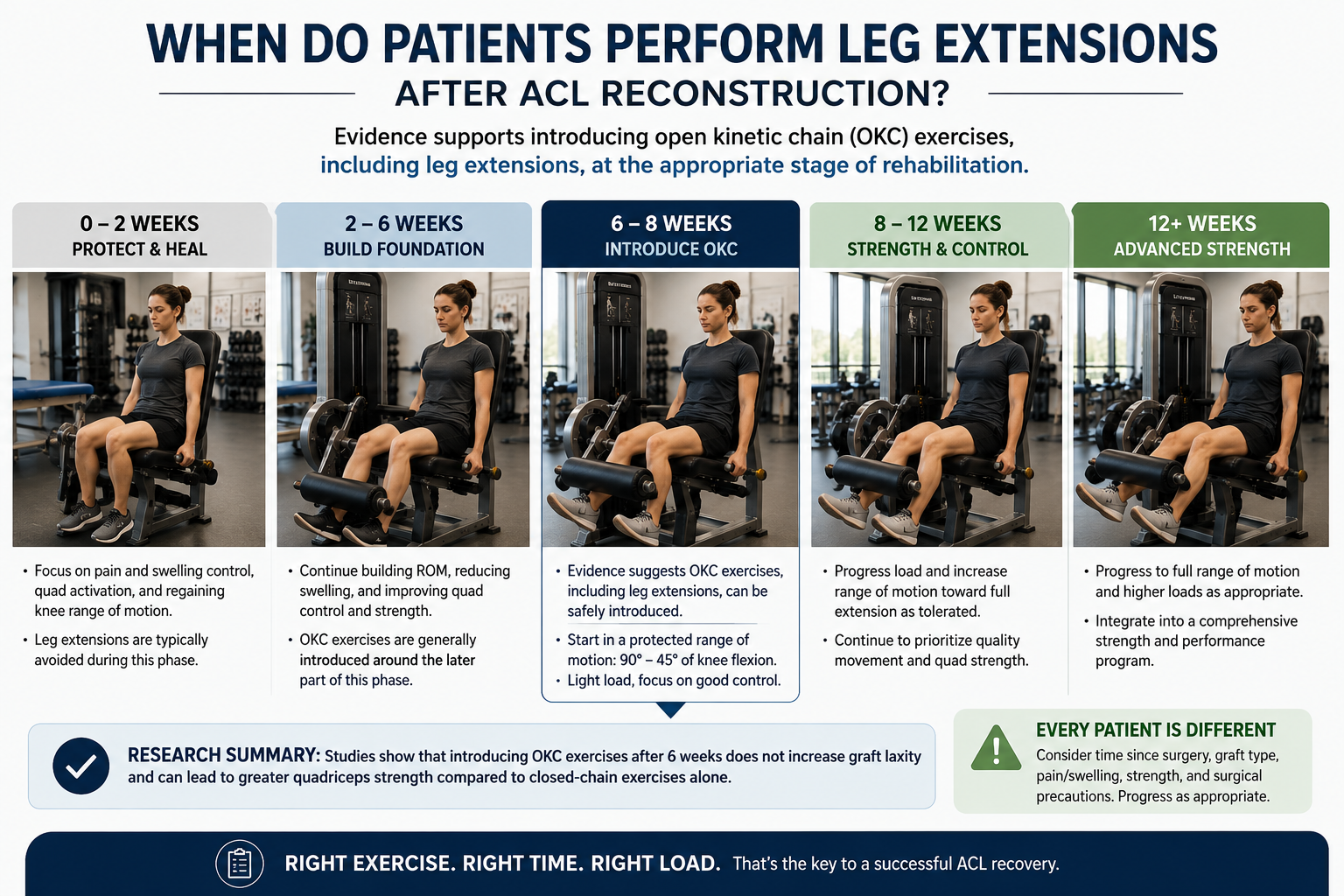
Biomechanics are helpful, but clinical outcomes matter more. A randomized controlled trial published in 2023 investigated whether introducing open kinetic chain exercises just four weeks after ACL reconstruction would negatively affect the graft. Researchers found that patients who performed both open and closed kinetic chain exercises developed greater quadriceps strength than those performing closed-chain exercises alone. Even more importantly, there were no significant differences in graft laxity at either three or six months after surgery. In other words, adding appropriately prescribed leg extensions improved strength without compromising knee stability.
What does the highest level of evidence show?
A 2018 systematic review and meta-analysis examined studies introducing open kinetic chain exercises either:
- Early: before 6 weeks after surgery
- Later: after 6 weeks
The findings were reassuring. Across the available studies:
- There were no clinically meaningful increases in graft laxity (greater than the commonly accepted 2 mm threshold).
- Patients who began open kinetic chain exercises after six weeks demonstrated significantly greater quadriceps strength during medium-term follow-up.
- Introducing these exercises before six weeks did not produce additional strength benefits, although it also did not appear to meaningfully increase graft laxity.
This suggests that timing matters more than avoidance. So should you do leg extensions?
Current evidence does not support the idea that properly prescribed leg extensions are inherently dangerous after ACL reconstruction. Instead, the research suggests they can be an important tool for restoring quadriceps strength, one of the biggest determinants of a successful recovery. That doesn’t mean everyone should jump onto a leg extension machine immediately after surgery.
Your rehabilitation should still consider:
- Time since surgery
- Graft type
- Pain and swelling
- Strength deficits
- Surgical precautions
- Overall progression of your rehabilitation program
Many clinicians still introduce leg extensions around 6-8 weeks post-operatively, often beginning in a protected range of motion (commonly 90° to 45° of knee flexion) before progressing toward full range as healing allows. This approach aligns with biomechanical research showing lower ACL strain in deeper flexion angles while still allowing meaningful quadriceps loading.
The bottom line.
The old belief that “leg extensions ruin ACL grafts” isn’t supported by today’s evidence. When introduced at the appropriate stage of rehabilitation and progressed thoughtfully, open kinetic chain exercises can significantly improve quadriceps strength without increasing clinically meaningful graft laxity. Like every aspect of ACL rehabilitation, the key isn’t avoiding an exercise, it’s prescribing the right exercise, at the right time, with the right load.
Disclaimer: This article is intended for educational purposes only and should not be considered medical advice. Every ACL reconstruction is unique. Always follow the recommendations of your orthopedic surgeon and physical therapist before starting or progressing any rehabilitation program.
References:
- Escamilla RF, et al. Journal of Orthopaedic & Sports Physical Therapy. 2012.
- Forelli F, et al. Early Use of Open Kinetic Chain Exercise in ACL Reconstruction Rehabilitation. 2023.
- Perriman DM, et al. Systematic Review and Meta-analysis. 2018.
- Fleming BC, Oksendahl H, Beynnon BD. Exercise and Sport Sciences Reviews. 2005.
- Luque-Seron JA, Medina-Porqueres I. Sports Health. 2016.
Are Leg Extensions safe after ACL Reconstruction?

Does your low back MRI matter?
Your back MRI may be a waste of money, and may not change your treatment.
What To Expect With A Knee Replacement
Let's discuss a few things that are usually overlooked about this surgery.