

Should we be avoiding knee extensions after an ACL reconstruction? Does the evidence hold up?

Does an MRI for your low back pain really matter?
Do you have low back pain? Chances are someone has told you, "You should get an MRI." This sounds logical. Your back hurts or you "threw it out," so let's take a picture of it and find the problem. If only things were that simple…
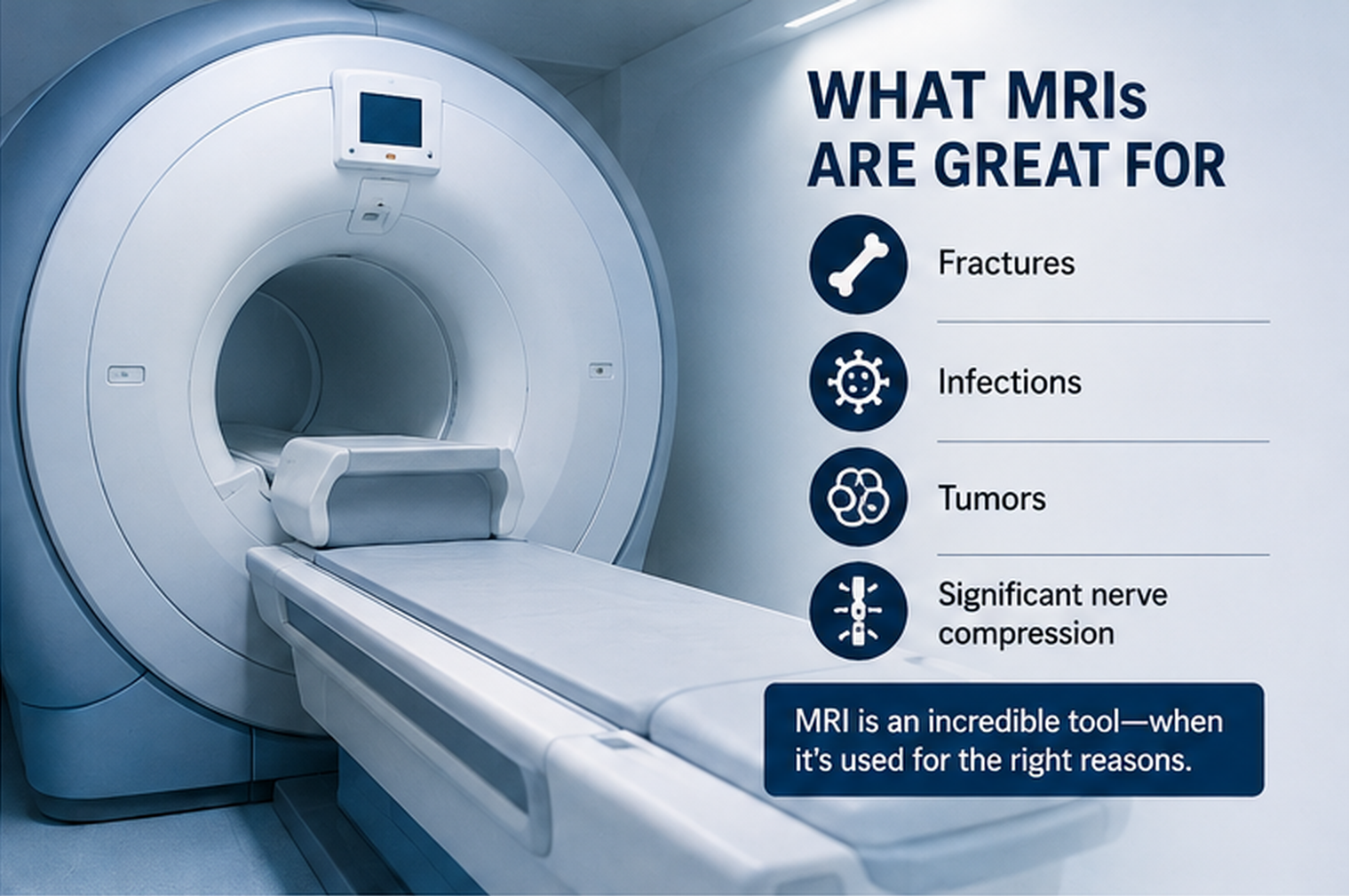
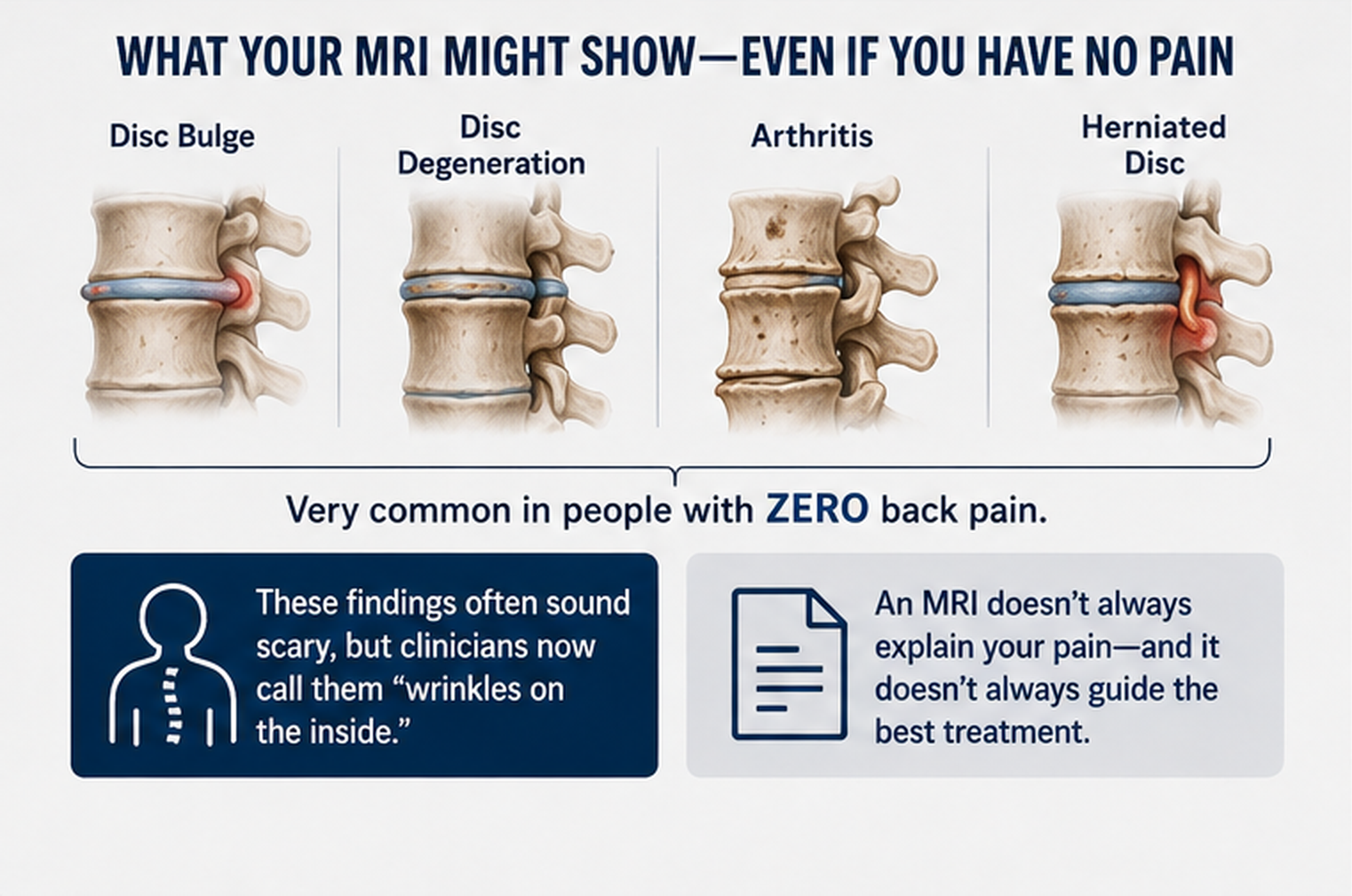
The MRI is a pretty impressive piece of technology. It has big magnets that make a lot of noise and gives us detailed images of your discs, joints, nerves, muscles, and bones. It's fantastic for identifying things like fractures, infections, tumors, and significant nerve compression. But when it comes to the most common type of back pain, which is non-specific low back pain, it often doesn't tell us what people think it will. The big issue with it is this: disc bulges, disc degeneration, arthritis, and herniated discs all sound very scary, but they're also incredibly common in people who have ZERO back pain. Large systematic reviews have shown that these findings become more common as we age, whether our backs hurt or not. A lot of clinicians are now referring to these findings as “wrinkles on the inside.”
The other wild idea is that people think getting an MRI for back pain will speed up recovery…but actually the opposite is true. Multiple systematic reviews and meta-analyses have found that routine MRI scans for non-specific low back pain don't improve pain, function, or long-term outcomes. What they can, and often do is create unnecessary worry. Reading words like "degeneration" or "bulging disc" can make people fearful of movement which usually compounds the pain, and can lead to expensive treatments they simply don't need.
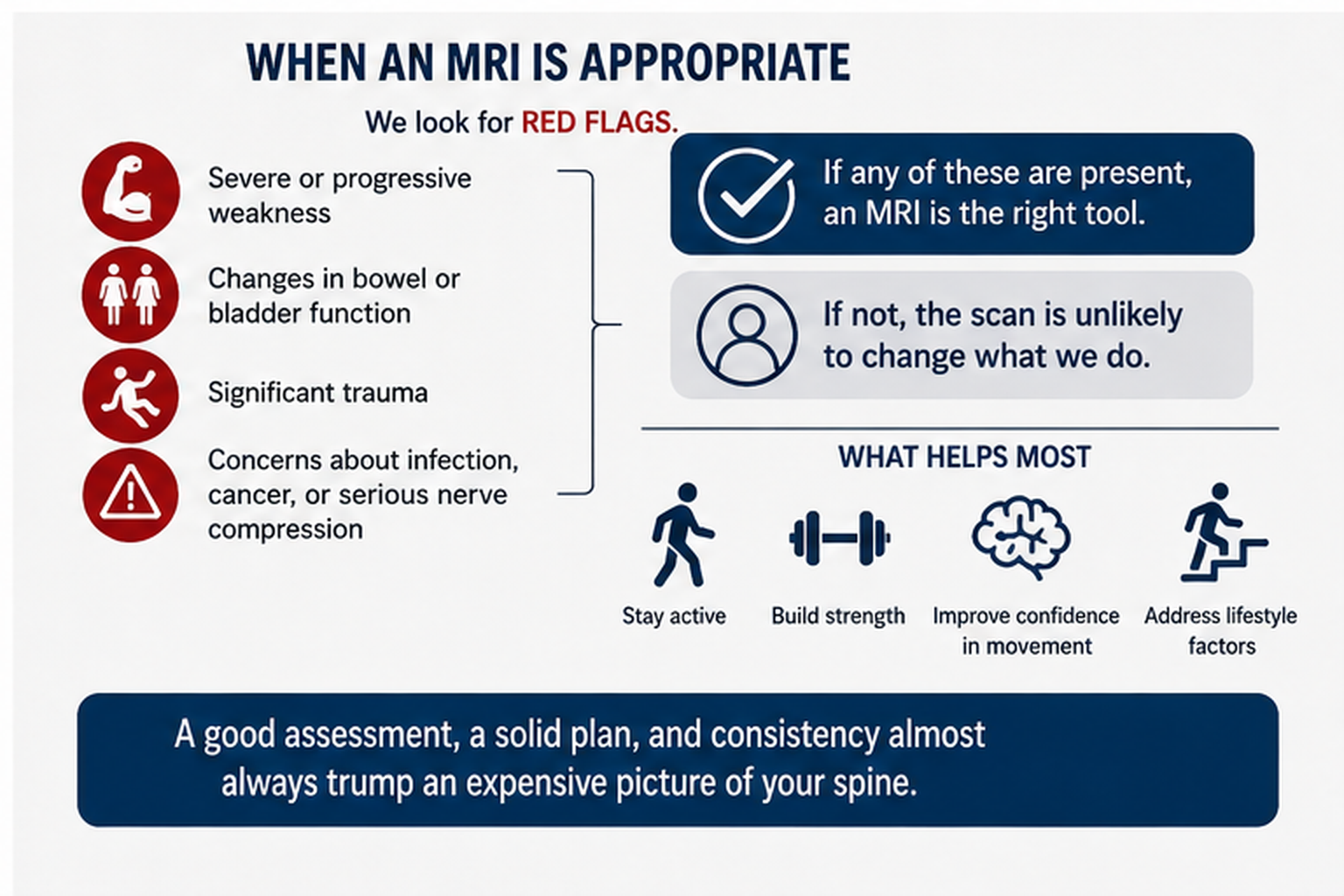
I feel like I should state something now. I refer people for MRI scans. They have their place. So before you start yelling at me for being a hypocrite, let me explain. The trick isn’t avoiding MRI scans, it’s using them when it actually matters and the clinical presentation is appropriate. There are red flags that we look for. If someone has severe or progressive weakness, changes in bowel or bladder function, significant trauma, or there are concerns about infection, cancer, or serious nerve compression, then an MRI is absolutely the right investigation. Those situations are exactly what MRI is designed for. For everyone else? The scan is unlikely to change what we do about your pain. The best evidence continues to support staying active, gradually building strength, improving confidence in movement, and addressing the lifestyle factors that influence pain. A good assessment, a solid plan, and consistency almost always trump an expensive picture of your spine.
So before running towards an MRI, ask yourself this: Will the result actually change my treatment? For most people with non-specific low back pain, the answer is probably not. Your scan doesn't define you. Your symptoms, your goals, and how you move are far more important than a few lines on a radiology report.

Are Leg Extensions safe after ACL Reconstruction?
Does your low back MRI matter?
Your back MRI may be a waste of money, and may not change your treatment.
What To Expect With A Knee Replacement
Let's discuss a few things that are usually overlooked about this surgery.